
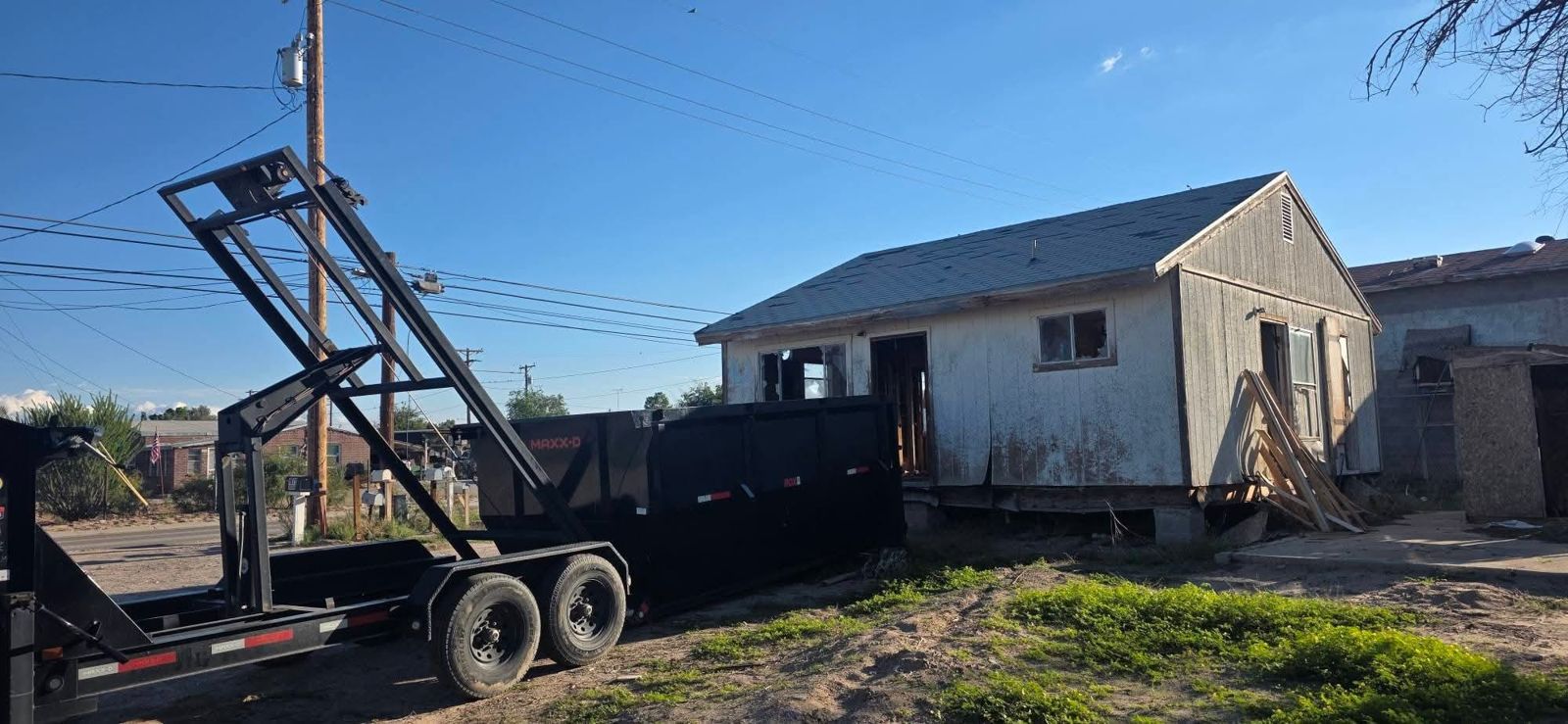
Outdoor clutter around a residence
Outdoor areas collect things over time. Old patio furniture, broken planters, scrap wood, worn-out grills, kids' toys, tarps, leftover building materials and bags of trash can end up along a fence or behind a shed. Because they are outside, they are easy to ignore until the yard becomes hard to use or the property needs to be ready for something.
An exterior cleanout tackles that buildup in one organized effort. The scope is limited to outside areas. It does not include interior cleaning, pressure washing, housekeeping, demolition or hazardous-material work.
Garage-adjacent piles, patios, side yards and outdoor storage
Most exterior cleanouts focus on a few typical areas. List the ones that apply to your property and describe what is in each.
| Area | Common contents to describe |
|---|---|
| Beside the garage or carport | Boxes, scrap lumber, old tools, broken equipment |
| Patio or porch | Furniture, planters, grills, rugs |
| Side yard | Piles of debris, old fencing, building leftovers |
| Back fence line | Accumulated items, tarps, bagged trash |
| Accessible outdoor storage | Contents of a shed or storage container |
If the debris is mostly plants and branches, our yard waste and landscape debris page has more specific guidance.
Planning a cleanup before a move or property turnover
Exterior cleanouts often happen around a transition: getting a home ready to sell, preparing for new tenants, or clearing a property after someone has moved out. These jobs usually have a deadline, so plan backward from the date the property needs to be ready.
- Decide what must be gone and by when.
- Sort out items to keep or move well before the cleanup date.
- Request a quote early so delivery or service can be planned around your deadline.
- Leave time after the cleanup for any final touches before the move or turnover.
Identifying items that must remain
Every property has things that need to stay: a working grill, garden tools, a shed itself, outdoor furniture that will be moved to the new home. Mark or move these items before the cleanup. A simple approach is to tag them with tape or gather them in one protected spot away from the debris.
Clear communication matters most when several people are involved, for example family members helping with a relative's home or a property manager coordinating with an owner. Agree on the keep list in writing before work begins.
Confirming where the debris is and the access required
Describe the location of each pile and the route from it to where a vehicle or container can be placed. Note the surface between them, such as grass, gravel, concrete or dirt, and any obstacles like steps or slopes.
- Which side of the house each pile is on.
- Distance from each pile to the driveway or street.
- Width of any gates and passages along the route.
- Steps, slopes, soft ground or uneven surfaces.
- Overhead lines, branches or roof edges where a container might go.
Gates, fences, parked vehicles and shared spaces
On the day of service, small obstacles can slow everything down. Unlock gates and make sure they open fully. Move cars, trailers and boats out of the driveway or placement area. If you share a driveway or alley with neighbors, let them know in advance and plan placement so nobody is blocked.
If pets live at the property, keep them secured during delivery, loading and pickup.
Separating household items from yard debris and heavy material
Outdoor piles are often a mix. Keep household items, plant debris and heavier construction-type materials such as concrete, brick, rock or soil in separate groups. That makes it easier to describe the job, estimate weight and handle any material that needs special attention.
Set aside anything that might be restricted, such as paint cans, fuel containers, batteries, tires, propane tanks, appliances or chemicals, and mention them before scheduling. Roadrunner does not perform hazardous-material remediation.
Clarifying whether loading assistance is needed and available
Some customers prefer to do the loading themselves with a rented container. Others need help moving items. Do not assume that either option is included. Tell Roadrunner which you prefer and how much help you need, and the availability of loading assistance will be confirmed for your job.
Container rental versus a scoped removal inquiry
With a container rental, a container is placed at the property and you fill it at your own pace. This often works well for larger cleanups or when family members will be working over a weekend. With a scoped removal inquiry, you describe the specific debris and ask whether Roadrunner can take it away. That may suit a defined pile that is ready to go.
Compare container sizes on the 10 yard, 15 yard and 20 yard pages, or read about trash removal for unwanted items.
Practical preparation checklist
- Walk the property and list every area that needs cleanup.
- Mark or move items that are staying.
- Separate household items, plant debris and heavy materials.
- Set aside anything that might be restricted and write it down.
- Measure the main piles and take photos.
- Check gates, access paths and the placement area.
- Decide whether you will load or need to ask about help.
- Request a quote with your address or ZIP code and preferred timing.
Example exterior cleanout scenarios
The scenarios below illustrate how people describe exterior cleanups. They are examples only, not completed Roadrunner jobs, and they do not confirm what will be accepted.
| Scenario | Typical items | Key question to ask |
|---|---|---|
| Preparing a home for sale | Patio furniture, side-yard piles, old planters | Can the work be finished before listing photos? |
| After a tenant moves out | Left-behind items in the yard and carport | Which items must be kept or documented? |
| Long-overdue backyard cleanup | Mixed debris, scrap wood, tarps, bags | Is there heavy material mixed in? |
| Clearing an outdoor storage area | Boxes, tools, broken equipment | Is anything possibly restricted? |
Estimating the volume of an outdoor cleanup
Outdoor piles tend to look smaller than they are because they are spread out. To get a rough estimate, measure each pile's length, width and height in feet, multiply the three numbers and divide by 27 to get cubic yards. Add the piles together for a total.
Remember that a loose pile includes a lot of air and that bulky items like furniture stack differently in a container. Treat your number as a starting point, and share photos so Roadrunner can offer a realistic recommendation. If the total is close to the edge of a container size, mention it so you can talk through the options.
Working with neighbors and staying safe
Exterior cleanups are visible, and they can affect the people next door. Let neighbors know if a container will be in the driveway or if a vehicle will be parked nearby. Keep debris on your side of shared fences and avoid blocking sidewalks.
Wear gloves and sturdy shoes, lift carefully and watch for nails, glass and pests in old piles. Do not open unknown containers of liquids or chemicals. Take breaks, especially in hot weather, and keep children and pets away from the work area.
What to expect on cleanup day
On the day of the cleanout, the main goals are clear access and clear communication. Have gates unlocked, vehicles moved and the keep items marked before anyone arrives. Keep your phone nearby in case there is a question about placement or an item.
If you are loading a rented container, work from the farthest pile toward the container so you are not walking around debris you have already moved. Load flat and heavy items first, then bulky pieces, and fill gaps with bagged material. Keep the load at or below the fill level you were given.
When everything is loaded or removed, take a final walk around the property. Check fence lines, behind sheds and under decks for anything missed. Then call to arrange pickup, or confirm the job is complete, so your outdoor space is ready for its next chapter.
Frequently asked questions
Is this the same as the “Home clean outside” service?
Yes. Exterior Home Cleanouts is the clearer name for the service listed on Roadrunner's flyer as “Home clean outside.”
Does an exterior cleanout include cleaning inside the house?
No. This service is limited to outdoor cleanup and removal inquiries. It does not include interior cleaning, pressure washing or housekeeping.
Can you help after a tenant moves out?
Exterior cleanup after a move-out is a common inquiry. Describe the outdoor areas and items, and Roadrunner will discuss the options.
Do I need to be home during the cleanout?
Ask during scheduling. At minimum, gates should be unlocked, keep items marked, and someone should be reachable by phone.
What if there are old paint cans or chemicals?
Set them aside and mention them before booking. Roadrunner does not perform hazardous-material remediation and will tell you whether they can be accepted.
Will someone help carry items to the container?
Loading assistance is confirmed per job. Let Roadrunner know what you need when you request a quote.
Can you take away an old shed or fence?
Removing a standing structure is demolition, which this service does not include. If the shed or fence has already been taken down and the pieces are piled up, describe the material and Roadrunner will tell you whether it can be handled.
Related pages
Discuss your cleanup project
Share the outdoor areas, items and access details, and Roadrunner Dumpster will help you plan the right approach before anything is scheduled.