
Larger cleanouts and renovation planning
A large job usually involves more people, more days and more types of material than a small cleanout. That makes planning more important. Before you request a quote, write down every phase of the project and the debris each phase will produce. A full-house renovation, for example, might include flooring removal, drywall, cabinetry, fixtures, packaging and final cleanup.
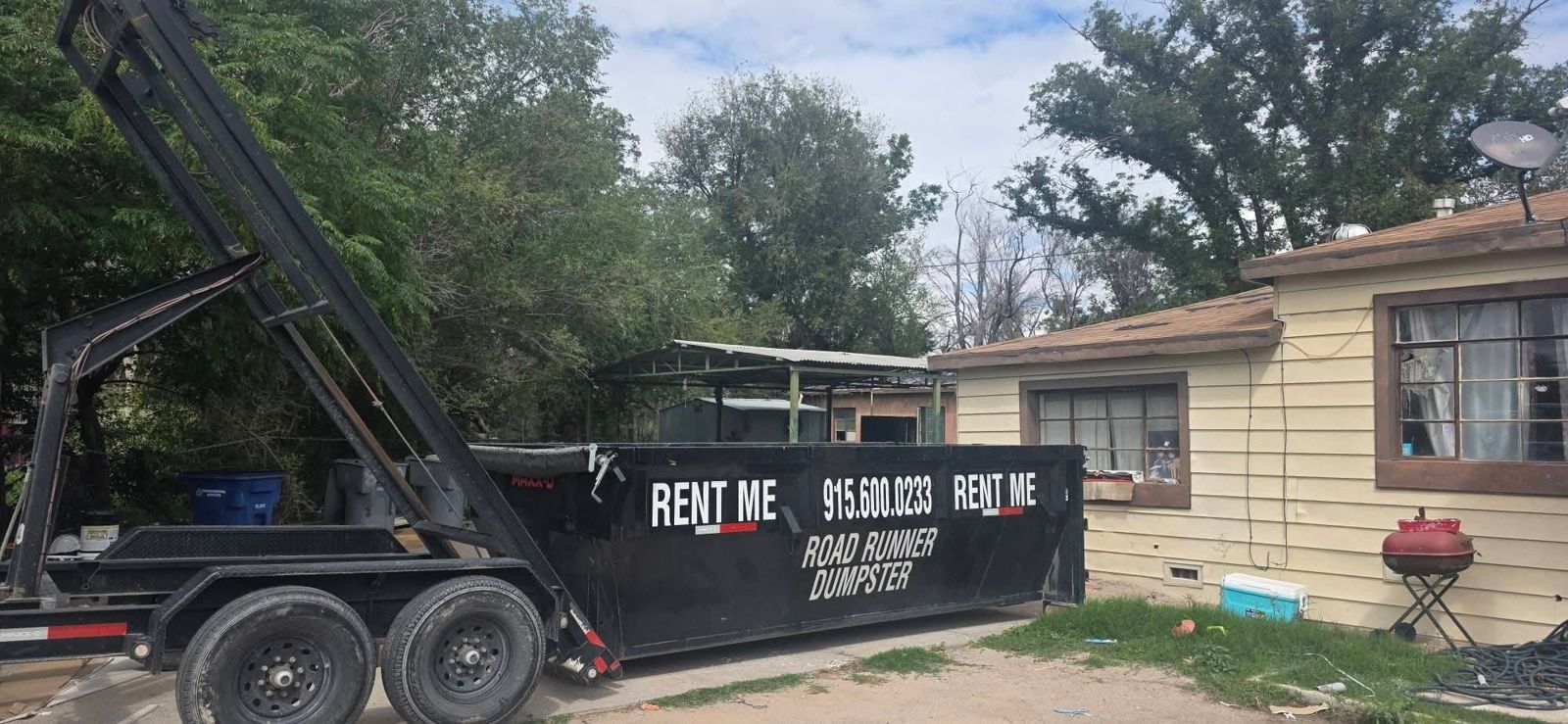
The 20 yard size gives a crew room to keep working without constant worry about space. It also has a bigger footprint, so it needs a suitable placement area and a clear path for delivery. If your project is smaller than it first seemed, the 15 yard dumpster rental may be a better fit and easier to place.
Examples on this page are planning illustrations, not completed Roadrunner jobs, and they are not guarantees of how much will fit.
Roofing-related disposal inquiries
Roofing is one of the reasons the 20 yard size exists in Roadrunner's lineup. Roofing debris, though, is among the heaviest material a container can hold. Shingles, underlayment, decking boards, flashing and nails add up quickly, and the weight of a tear-off depends on many factors that cannot be judged by roof area alone.
If your inquiry is about roofing, read the dedicated roofing material disposal page as well. It covers material types, multiple layers and how to coordinate placement with the roofing contractor. Roadrunner provides disposal planning only; it does not install, repair or tear off roofs.
Why larger volume does not mean unlimited weight
It is natural to assume the biggest container can take anything. In reality, every container and every haul has weight considerations. A 20 yard container filled to the top with dense material such as shingles, concrete or soil may far exceed what can be hauled safely or what is included in a quote, even though there is still visible space.
| Scenario (illustration) | Volume picture | Weight picture |
|---|---|---|
| Whole-house furniture cleanout | Fills a lot of space | Often moderate |
| Mixed renovation debris | Fills steadily over days | Varies with tile, drywall and fixtures |
| Roof tear-off debris | May not look full | Can be very heavy |
| Concrete or soil | Small portion of space | Very heavy quickly |
That is why Roadrunner asks about materials before recommending a size. Be honest about the heavy portions of your job; it is the best way to avoid an overweight load, extra costs or a container that cannot be picked up as planned.
Organizing a multi-day project
Large jobs often run across several days or weeks. A little organization keeps the container useful the whole time.
- Assign one person to manage the container: what goes in, how it is loaded and when it is close to full.
- Load heavy, flat material along the bottom first and lighter, bulky items above it.
- Break down cabinets, boxes and framing where it is safe to save space.
- Keep a separate area for anything that needs to be discussed or handled differently.
- Check the fill level at the end of each day so you can plan pickup or a next load in advance.
Ask during your quote how rental duration works for a longer project and how to request pickup, so the crew knows what to expect.
Keeping work areas and delivery access clear
A large container needs a clear, stable placement area and a path wide enough for the truck and trailer to set it down and pick it up. On busy job sites that path can disappear as materials and vehicles accumulate. Mark the container area and the approach, and keep both open for both delivery and pickup day.
- Confirm there are no overhead lines or branches above the placement spot.
- Keep material deliveries and parked trucks out of the approach path.
- Avoid placing the container over septic systems, irrigation or soft ground.
- Keep walkways and doors clear for workers and residents.
- Ask what is needed if the container would go on a street or in a shared lot.
Discussing dense materials before booking
Concrete, brick, block, stone, tile, plaster, soil and roofing are all dense. Some jobs include only a little of these; others are mostly dense material. Either way, mention them with an approximate amount. Roadrunner may suggest keeping certain materials separate, limiting how much goes in a single load, or using a different approach altogether.
Do not hide heavy material under lighter debris. It does not change the weight, and it can create problems at pickup.
If you are unsure what something is, especially older building materials, ask before it goes in the container. Some materials require special handling and cannot be accepted.
Avoiding an oversized or undersized selection
Bigger is not automatically better. An oversized container can take up driveway space you need and may cost more than necessary. An undersized one can stall a job halfway through. The right choice comes from matching volume and weight to the actual work.
Use the planning information on this page, measure what you can, and share photos. If you are clearing out several rooms of mostly light contents, a 20 yard size may make sense. If your job is a dense, focused tear-out, a smaller container with a plan for additional loads might be discussed. The services overview compares every option.
Planning pickup and asking about additional loads
Decide in advance how you will handle the end of the job. If the project is likely to fill the container more than once, ask about additional loads or container changes during the quote. Roadrunner cannot promise availability on a particular day without checking the schedule, so raising it early gives you the best chance of a smooth transition.
When you are ready for pickup, make sure the load is at or below the fill level, the access path is clear and nothing is leaning against or tied to the container.
Quote details for contractors and property managers
Contractors and property managers often coordinate on behalf of someone else. Including the right details in your quote request saves back-and-forth.
- Project address or ZIP code and the on-site contact's name and phone.
- Type of work and the expected phases of debris.
- Main materials with approximate amounts, especially dense ones.
- Preferred placement and any access restrictions or gate codes.
- Target delivery date and the expected duration of the work.
- Whether additional loads might be needed and roughly when.
- Who approves the quote and who should receive scheduling updates.
Turnovers and cleanouts for property managers
Property managers and landlords often face larger cleanouts on a deadline: a unit left full of belongings, a yard that has collected debris over a long tenancy, or several units being refreshed at once. A larger container can help a crew work through that volume in one effort instead of scheduling repeated small hauls.
Before requesting a quote, confirm who has authority to approve the work, whether any items must be stored or documented, and whether tenants or neighbors share the driveway where the container would sit. Note any rules your property or association has about where containers may be placed and for how long.
If several properties are involved, list each address separately with its own access notes. Roadrunner can then tell you what is realistic for each site rather than giving a single answer that may not fit them all.
Wrapping up a large project
At the end of a large job, sweep the work area, gather remaining scraps and make sure nothing is left on top of or around the container. Confirm the fill level and call to request pickup.
Frequently asked questions
How many roofing squares fit in a 20 yard dumpster?
Roadrunner does not quote a number of squares, because the weight of roofing debris depends on the material, layers and other factors. Describe the job and Roadrunner will discuss what makes sense.
Is the 20 yard container the right choice for a whole-house cleanout?
It is the size many people consider for a full property with mostly household contents. Share photos and a list of materials so the recommendation reflects your real volume and weight.
Can I put concrete or dirt in a 20 yard container?
Dense materials must be discussed before booking. The large volume does not mean you can fill it with heavy material, and special loading or a different plan may be needed.
Can I get another container when this one is full?
Ask about additional loads or swaps during your quote. Availability depends on the schedule and is confirmed case by case.
Does Roadrunner load the debris for me?
Container rentals are generally loaded by the customer or their crew. If you need help with loading, ask during your call so the scope can be discussed and confirmed.
How much space do I need for a 20 yard container?
You need a level, stable area and a clear approach for the truck and trailer. Ask for the measurements during your call if space is tight.
Can a contractor book on behalf of a homeowner?
Yes, contractors and property managers can request a quote. Include the property contact and any access details so placement can be coordinated.
Related pages
Plan your large project
Send the project phases, materials and site details, and Roadrunner Dumpster will help you plan the right container and pickup before anything is booked.