
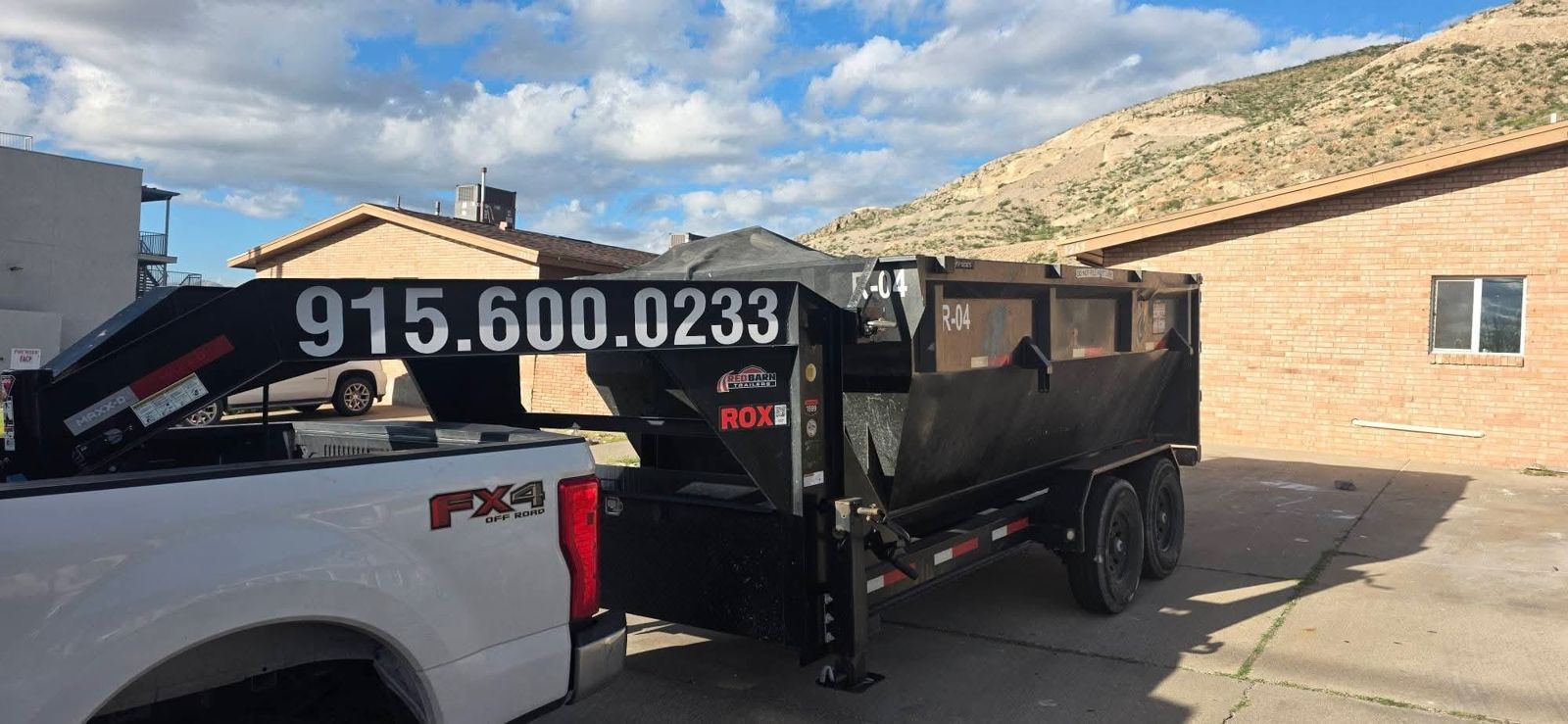
What a 10 cubic yard container means in practical terms
Dumpster sizes are named by volume. A cubic yard is a block of space three feet long, three feet wide and three feet tall, so a 10 yard container holds roughly ten of those blocks once it is loaded evenly up to its approved fill line. That number describes space, not weight, and it assumes the material is packed reasonably well rather than tossed in at odd angles with gaps between pieces.
In everyday terms, the 10 yard size is meant for jobs where you can stand in one spot and see most of what needs to go. If your project fits in a single garage bay, one cluttered side yard, or a modest pile of boxes and broken furniture, this is the size worth asking about first. When the job spreads across several rooms, several days of demolition, or a full property, a larger container usually deserves a conversation.
Roadrunner does not publish exterior dimensions or pickup-truck equivalents on this site, because those numbers vary and are easy to misread. If the footprint matters for your driveway or gate, ask during your call and the measurements can be confirmed for the container that would be delivered.
Garage sorting and smaller household cleanouts
Garage cleanouts are the classic 10 yard job. Over the years a garage collects worn-out shelving, broken lawn chairs, old bicycles, empty boxes, scrap lumber from weekend projects and items nobody has used in a long time. Most of that is bulky but light, which suits a compact container well.
The best garage cleanouts start before the container arrives. Pull everything into three groups: keep, give away or sell, and dispose. The dispose group is what you are sizing for. If you do the sorting first, you will know whether you really have a 10 yard pile or whether the giveaway group is about to shrink it dramatically.
Other smaller household projects to ask about
- Clearing a storage shed or a single outdoor storage area.
- Removing old furniture after a move or a room refresh.
- Emptying a closet, spare room or attic area of boxed clutter.
- Getting rid of packaging and debris after a small furniture or fixture upgrade.
- Preparing a rental unit between tenants when the leftover items are limited.
Each of these is an example of the kind of job people often describe for a compact container. They are not promises that every item will be accepted; the next sections explain why material type has to be discussed.
Smaller project debris, subject to material approval
A compact container can also be a practical choice for the debris from a small home project, such as replacing a few cabinets, tearing out a short run of fencing, or swapping a vanity. The key phrase is subject to approval. Construction-style debris varies widely in weight and in how it must be handled, so describe it specifically when you call.
Instead of saying “remodel debris,” say what it is: drywall pieces, carpet and pad, a few cabinet boxes, trim boards, a bathtub, tile, or broken concrete. Those materials behave very differently in a container. Carpet is bulky and light. Tile and concrete are dense and can reach a weight limit long before the container looks full.
Never place an item in a container because you assume it is allowed. Paint, chemicals, batteries, tires, appliances and anything with fluids or refrigerants should be discussed with Roadrunner before booking.
How to estimate your pile before choosing a size
You do not need to be exact, but a rough estimate helps you avoid guessing. One simple approach is to gather the disposal items into a single loose pile, then measure its length, width and average height in feet. Multiply those three numbers and divide by 27 to get an approximate number of cubic yards.
| Example pile (illustration only) | Math | Approximate volume |
|---|---|---|
| 8 ft long × 6 ft wide × 3 ft high | 144 ÷ 27 | About 5.3 cubic yards |
| 10 ft long × 6 ft wide × 4 ft high | 240 ÷ 27 | About 8.9 cubic yards |
| 12 ft long × 8 ft wide × 4 ft high | 384 ÷ 27 | About 14.2 cubic yards |
Loose piles contain a lot of air, and items like chairs and boxes stack differently inside a container than on the floor. Treat your number as a starting point to share during the call, not as a final answer. If your estimate lands close to ten yards, mention that, because it may make sense to discuss whether a bit more room would prevent an overfilled container.
Photos help more than measurements alone. A couple of wide shots of the pile and one shot of where the container would sit give Roadrunner far more to work with than a description over the phone.
Bulky objects versus dense materials
The most common sizing mistake is focusing only on how much space something takes up. Two piles that look the same size can weigh very different amounts. A sofa, a stack of empty boxes and a broken treadmill take up space. A pile of roofing shingles, soil, rock, brick or tile of the same size can be many times heavier.
| Usually bulky and lighter | Usually dense and heavier |
|---|---|
| Upholstered furniture, mattresses (if accepted) | Concrete, brick, block and stone |
| Cardboard, packaging, plastic bins | Dirt, sand, gravel and rock |
| Old shelving, light lumber, trim | Tile, plaster and mortar |
| Carpet, pad and fabric items | Shingles and other roofing material |
If your project includes anything from the dense column, say so up front. A compact container can still be a good fit for a limited amount of heavier material, but weight rules, accepted materials and loading instructions need to be confirmed for your specific job.
When a 15 yard container may be the better choice
Choosing the smallest size is not always the most economical decision. If the container fills before the work is finished, you may need to ask about another pickup, a swap or a different arrangement, and that coordination takes time. Consider asking about the 15 yard dumpster rental when any of these apply:
- Your pile estimate is already near or above ten cubic yards.
- The job involves more than one space, such as a garage plus a backyard.
- You expect debris to keep coming over several days of work.
- There are several large furniture pieces that will not nest together.
- You are combining a household cleanout with a small remodel.
For roofing, a full property, or a renovation that will generate debris in waves, the 20 yard dumpster rental page explains the planning for larger volumes. If you are unsure, choose “Not sure yet — help me choose” on the quote form and describe the project.
Placement, clear access and loading considerations
A container has to be delivered by a truck and trailer, so placement is about more than where you want the debris to end up. Think about the path the truck needs to back in, overhead lines or branches, low roof edges, and whether the surface is firm enough. In the photos on this site you can see containers set on driveways and lots beside homes; your location will have its own considerations.
- Move vehicles, trailers and equipment out of the placement area before delivery.
- Check for overhead wires, tree limbs or eaves above the spot.
- Note any gates, curbs, slopes or soft ground on the approach.
- Ask whether boards or other surface protection are recommended for your driveway.
- If street placement is being considered, ask what local permission may be required.
Load the container evenly. Break down boxes and furniture where it is safe to do so, place flat items along the sides and bottom, and fill gaps with smaller pieces. Keep everything at or below the fill level Roadrunner gives you so pickup can happen safely.
What to discuss about weight, duration, materials and pickup
Every rental is confirmed during the quote conversation rather than on this page. That keeps the information accurate for your job. Before you agree to a booking, make sure you understand these points:
- Weight: what allowance applies and what happens if the load is heavier.
- Rental period: how long the container can stay and how to extend if needed.
- Accepted materials: which items are allowed and which need another plan.
- Delivery: the date window and any instructions for placement.
- Pickup: how to request it when you are finished and what condition the load should be in.
- Pricing: what is included in the quote and what could change it.
Asking these questions early avoids surprises and gives you a clear picture of the total cost and timeline.
Detailed quote-preparation checklist
Have this information ready when you call 915-600-0233 or fill out the quote form. The more complete it is, the faster Roadrunner can give you a useful answer.
- The project address or ZIP code so coverage can be confirmed.
- A short description of the project, such as a garage cleanout or small cabinet replacement.
- A list of the main materials, especially anything heavy or possibly restricted.
- Your rough pile estimate in cubic yards, or the length, width and height of the pile.
- Where you would like the container placed and any access obstacles.
- Your preferred delivery timing and how long you expect to need it.
- Photos of the pile and the placement spot, if you can text or send them.
- Whether you are the property owner, a tenant or a contractor working on site.
Frequently asked questions
Is a 10 yard dumpster big enough for a garage cleanout?
Often it is, especially once you have sorted out items to keep or give away. Measure the disposal pile and share photos so Roadrunner can tell you whether 10 yards looks realistic or whether more room would be safer.
Can I put heavy materials like concrete or tile in a 10 yard container?
Heavier materials have to be discussed before booking. Some dense debris may be allowed in limited amounts, but weight allowances and accepted materials depend on your job and must be confirmed during the quote.
How long can I keep the container?
The rental period is confirmed in your quote. If you think your project may take longer than expected, mention it at the start so you know your options for extending.
What if the container fills up before I am finished?
Call Roadrunner as soon as you see it filling up. You can ask about a pickup and another load or a different arrangement, but availability depends on the schedule and has to be confirmed.
Do I need to be home for delivery?
Ask when you schedule. At a minimum, the placement area needs to be clear and any gates unlocked, and you should share instructions about where the container should go.
Can I load it above the top edge?
No. Keep the load at or below the fill level you are given. Overfilled containers cannot be hauled safely, and items may need to be removed before pickup.
Related pages
Help me choose a container
Share your pile estimate, materials and placement details, and Roadrunner will help you decide whether 10 yards fits or a larger size makes more sense.